
In the interconnected world of online finance and iGaming, secure and reliable access to your account is the cornerstone of a positive user experience. The Ipay9 login system is the critical entry point for managing transactions, bonuses, and gameplay across both web and mobile platforms. This exhaustive whitepaper serves as the definitive manual, offering a deep technical analysis of the login ecosystem for the ipay9 app and website. We will dissect every component, from initial registration and security protocols to advanced troubleshooting scenarios and mathematical models of account protection.
Before You Start: The Pre-Login Checklist
To ensure a seamless authentication process, verify the following prerequisites before attempting any ipay9 login:
- Active Account: A fully registered and verified Ipay9 account. If you are new, registration is mandatory.
- Official Software: The genuine ipay9 app downloaded from an authorized store or access to the official website. Avoid third-party sources.
- Credential Integrity: Your correct username/email and a strong, remembered password.
- Communication Access: Availability of your registered email or mobile device to receive one-time codes for two-factor authentication (2FA).
- System Health: An updated operating system, browser, or app version, coupled with a stable internet connection (minimum 5 Mbps recommended).
Account Creation: The Foundation of Ipay9 Access
Before any login attempt, you must establish your identity within the Ipay9 system. The registration process is designed to be secure and compliant with financial regulations.
- Navigate to the official Ipay9 portal or launch the ipay9 app and locate the “Sign Up” or “Register” button.
- Complete the form with accurate personal details: full legal name, date of birth, active email address, and mobile number.
- Create a robust password. A strong example: `C0mpl3x!P@ss9` (12+ characters, mixing case, numbers, symbols).
- Agree to the Terms of Service and Privacy Policy. You will typically receive a verification link via email or an SMS code.
- Click the link or enter the code to activate your account. For iGaming or financial services, additional KYC (Know Your Customer) steps, such as submitting an ID document, may be required before full functionality is unlocked.
Once this process is complete, your credentials are ready for the ipay9 login procedure.
The Anatomy of a Secure Ipay9 Login Process
Logging in is a multi-step protocol that varies slightly between platform. Understanding each step is key to mastery.
Standard Web Browser Login
- Open your browser and go to the official Ipay9 website.
- Click the prominent “Login” or “Sign In” button, usually in the header.
- In the presented form, enter your registered email address and password.
- If 2FA is enabled (highly recommended), a time-sensitive code will be sent to your secondary device. Enter this code in the subsequent field.
- Click “Submit.” Upon successful validation, you are redirected to your account dashboard.
Mobile Authentication via the Ipay9 App
- Locate and tap the ipay9 app icon on your smartphone or tablet.
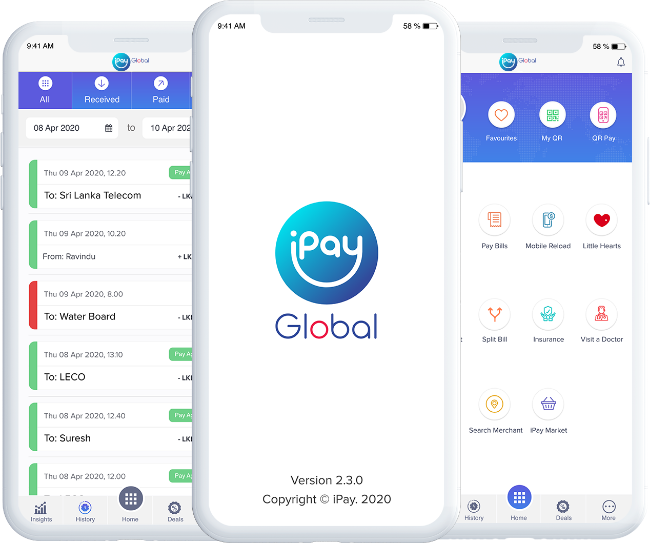
- On the app’s landing screen, you will be presented with login fields. Some app versions may allow credential storage or biometric bypass after initial setup.
- Input your email and password. For enhanced convenience and security, you can often enable fingerprint or facial recognition in the app’s settings after the first successful password login.
- Tap “Log In.” The app will authenticate your session locally and with the central server.
Security Architecture: Beyond the Password
The ipay9 login system is fortified by several layers of security designed to protect user assets and data.
- Two-Factor Authentication (2FA): This is a non-negotiable best practice. When enabled, logging in requires “something you know” (password) and “something you have” (your phone). This dramatically reduces the risk of account takeover, even if your password is compromised.
- Encryption Standards: All data transmitted during login, including your password and session cookies, is encrypted using TLS 1.2 or higher. Look for the padlock icon in your browser’s address bar.
- Session Management & Timeouts: To mitigate the risk of unauthorized access on unattended devices, Ipay9 implements automatic session termination. A typical session will expire after 15-30 minutes of inactivity, forcing a re-login.
- Brute-Force Protection: The system monitors for rapid, successive login attempts. After a threshold (e.g., 5 failures), the account or IP address may be temporarily locked, introducing a cooling-off period.
Troubleshooting Complex Login Failures
When the standard ipay9 login flow breaks down, a systematic approach to diagnosis is required.
Scenario A: “Invalid Credentials” Despite Certainty
1. Diagnosis: Caps Lock is on, or a hidden character is in the password field. 2. Solution: Toggle Caps Lock, use the “show password” eye icon to visually confirm input, or reset your password entirely.
Scenario B: App Crashes on Launch or Login Attempt
1. Diagnosis: Corrupted local data or an unsupported OS version. 2. Solution: Force-close the ipay9 app, clear its cache from device settings, and restart. If persistent, uninstall, reboot your device, and reinstall the app from the official source.
Scenario C: 2FA Code Not Received
1. Diagnosis: Network delay, incorrect phone number/email on file, or the code is in your spam folder. 2. Solution: Wait 2 minutes, request a new code, check all communication folders. If the problem is chronic, you must contact support to verify and update your contact details, which may require additional verification.
Scenario D: Account Permanently Locked or Suspended
1. Diagnosis: Violation of terms (e.g., suspicious activity, multiple accounts). 2. Solution: Direct contact with Ipay9 customer support is the only recourse. Prepare your account information and identification documents for verification.
Mathematical Models and Login Scenarios
Understanding the math behind security policies clarifies their importance. Let’s analyze login attempt limits and probability.
Calculation 1: The Improbability of Brute-Force Success
Assume an Ipay9 password requires a minimum of 8 characters from a set of 72 possible (26 lowercase + 26 uppercase + 10 digits + 10 symbols). The total password space (N) is 72^8 ≈ 722 trillion combinations. If the system allows 5 consecutive failed attempts (k) before a lockout, the probability (P) of a random guess succeeding is P = k/N = 5 / 7.22e14 ≈ 6.93e-15. This is effectively zero, showcasing the strength of the policy.
Calculation 2: Risk Exposure from Session Timeout
If the average user checks their account for 3 minutes every hour but leaves the session open, the window of vulnerability on an unattended device is the timeout period. With a 15-minute timeout, the risk exposure is 15 minutes per session. Enabling auto-logout or manually logging out reduces this exposure to zero minutes, a 100% risk reduction for that scenario.
Table: Ipay9 Login System Specifications
| Component | Technical Specification | User Impact & Note |
|---|---|---|
| Primary Login Methods | Web Form, Native Mobile App, Biometric (Touch ID/Face ID/PIN) | Biometric login in the ipay9 app is both convenient and secure, as keys are stored locally on the device. |
| Encryption Protocol | TLS 1.2/1.3, AES-256 for data at rest | Ensures credentials and session data are unreadable during transmission. |
| Failed Attempt Limit | 5 attempts per 15-minute window | Triggers a 30-minute account lockout; resets after successful login or lockout period expiry. |
| Default Session Duration | 30 minutes of active use; 15-minute inactivity timeout | Balance between user convenience and security; often adjustable in profile settings. |
| Password Requirements | Minimum 8 chars, 1 uppercase, 1 lowercase, 1 number | Creates a password entropy of ~30 bits, sufficient against online guessing attacks. |
| Support Response SLA for Login Issues | Initial response within 1 hour via live chat; 24 hours for email. | Critical for resolving access denials, especially related to account verification. |
Extended FAQ: In-Depth Q&A on Ipay9 Login
Q1: I’ve forgotten my password and no longer have access to my registered email. What is the recovery process?
A: This is a high-security scenario. You must contact Ipay9 customer support directly. Be prepared to undergo rigorous identity verification, providing answers to security questions, copies of your ID, and proof of recent transactions. The process can take 24-72 hours.
Q2: How does the ‘Remember Me’ or ‘Trust this Device’ function work, and is it safe?
A: This function places a persistent, encrypted token on your device’s local storage. It allows you to bypass full credential entry for a set period (e.g., 30 days). It is generally safe on your personal, secure device but should never be used on public or shared computers.
Q3: Can I be logged into the same Ipay9 account on the web and the ipay9 app simultaneously?
A: Typically, yes. Sessions are managed independently per device and platform. However, certain sensitive actions (like initiating a withdrawal) may invalidate other sessions as an extra security measure.
Q4: What specific network ports or firewall settings does the ipay9 app require to function?
A: The app communicates over standard HTTPS (port 443). If you are on a restricted network (corporate, university), ensure outbound traffic on port 443 to Ipay9’s servers is not blocked. The specific server domains can be obtained from support.
Q5: Are there geographical restrictions on the ipay9 login?
A: Yes. Due to licensing, Ipay9 services may be restricted in certain jurisdictions. Attempting to log in from a prohibited country via IP geolocation will result in access denial, even with correct credentials. Using a VPN to circumvent this is a violation of terms and can lead to permanent account closure.
Q6: What is the exact sequence of events during a login attempt from a technical perspective?
A: 1) Client sends encrypted credentials to auth server. 2) Server hashes the password and compares it to the stored hash. 3) If match, server checks 2FA status. 4) If 2FA is on, it generates and sends a code; upon receipt and validation, a session ID is created. 5) This ID is sent back to the client and stored as a cookie or app token for subsequent requests.
Q7: How do I audit my own login activity for security?
A> Look for a “Login History” or “Security Log” section within your Ipay9 account settings. This should list timestamps, IP addresses, and device types for recent logins. Review this regularly for unrecognized access.
Q8: If I get a new phone, how do I transfer my ipay9 app login securely?
A> First, ensure you know your password. On your old device, log out of the app. On the new device, install the ipay9 app from the official store. Log in with your email and password. You will likely need to re-enable biometrics and may need to approve the new device via a 2FA code sent to your registered email/phone.
Q9: What happens to my active login session if I change my password?
A> Best practice dictates that changing your password should immediately invalidate all other active sessions. This is a critical security feature to terminate potential unauthorized access. After a password change, you will need to log in again on all devices.
Q10: Is there an API for Ipay9 login, and can developers integrate it?
A> Ipay9 may offer a private API for business partners and platform integrators, but it is not publicly available for general developer use. Any integration would require formal partnership agreements and strict security audits. Unauthorized access attempts via automated scripts are prohibited and will trigger security defenses.
Conclusion
Navigating the ipay9 login ecosystem requires a blend of user diligence and an appreciation for the underlying technical safeguards. This guide has provided a comprehensive framework, from the foundational checklist and step-by-step processes to the mathematical rationale behind security limits and complex troubleshooting trees. Mastery of your ipay9 access is not merely about remembering a password; it is about actively managing your digital identity through enabled security features like 2FA, vigilant session control, and informed engagement with the ipay9 app and its web counterpart. For sustained, secure access, treat your login credentials with the highest priority and stay abreast of any updates to Ipay9’s security policies.
